

Elm Dining Table
Dining Room HomePageDesigned to compliment the CH33 style dining chairs, the elm dining table features a huge 2.2m long top made from locally sourced timber. The legs use the crossover design I have used on smaller tables before.
Designed to compliment the CH33 style dining chairs, the elm dining table features a huge 2.2m long top made from locally sourced timber. The legs use the crossover design I have used on smaller tables before.


This was designed to fit a specific space in a client’s house. The ash top has fantastically characterful grain with legs based on the scissor arch design that has worked so well on coffee tables.


This is part of a set of eight dining chairs in local elm with upholstery by Northgate Interiors. The design is based on the classic Hans Wegner CH33 chair – very elegant and comfortable. The back is curved using laminations of solid elm with a curved seat base.

Designed as a contemporary feel dining table to seat 8, this table uses some gorgeous beech with subtle grain features. The legs are a relatively simple tapered design with gentle curves to complement the curved ends of the top.


Dining table in burr elm & glass – this is quite a unique piece. I had used the idea of using shaped glass to follow the natural edge of the timber on coffee tables before but scaling it up to dining table size (7 feet long) was a significant challenge! It took some time to find the elm – the pieces were stunning evening rough sawn state (and very large & heavy!). The glass was almost beyond what was achievable but the glazier managed to make it.
The legs use the scissor arch design used so successfully before. The console table was designed as a companion piece.


Designed as a companion to the elm & glass dining table, this console table uses a stunning piece of burr elm as a top. The legs are a modification of the scissor arch legs used on the dining table. It is intended as a dining room piece but could equally well fit in a hallway.


Part of a bedroom furniture set, the cupboard unit makes use of curved sides to give a flow to the piece. It was designed to give the appearance of a standard cupboard while containing audio equipment – cable management features are included. The door fronts use an ‘S’ curve on the front face of rosewood inlay to contrast the light coloured sycamore. Sliding doors were used on the cupboard to allow it to occupy an awkward space.


The oak corner unit was designed for a new custom built house. It sits under a feature oak staircase and is intended to provide a combination of book shelves, storage and display area. It takes in a corner so the opportunity to use concave and convex doors allowed it to sweep round the corner. The book case is stepped to follow the line of the stairs and stainless steel supports for the end shelves were used to tie into stainless steel in the stair.

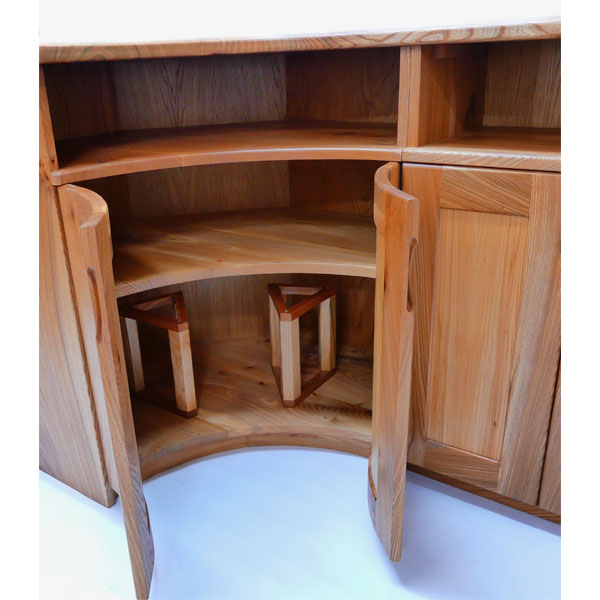
This unit was designed to fit a specific space and hold a Hi-Fi unit and an LP collection. Elm is always a great wood to work with and the grain in this wood shows off well. The curved doors take the unit gracefully round the corner. Wedges inside the unit were designed to keep the records in place.
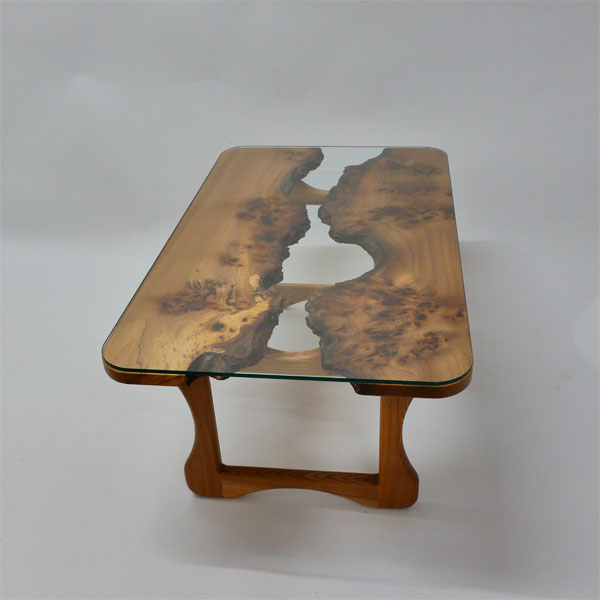
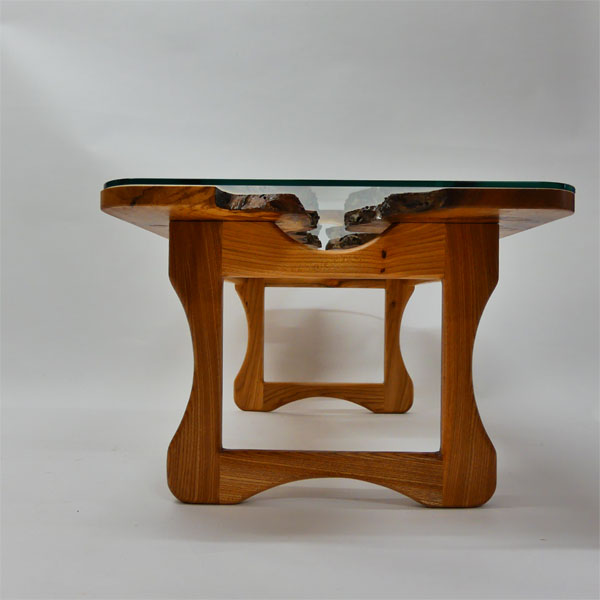
This is a variant on tables made previously using a fantastic piece of burr elm to give a characterful table top. The top is covered in toughened glass and the scalloped square legs and an interesting feature.
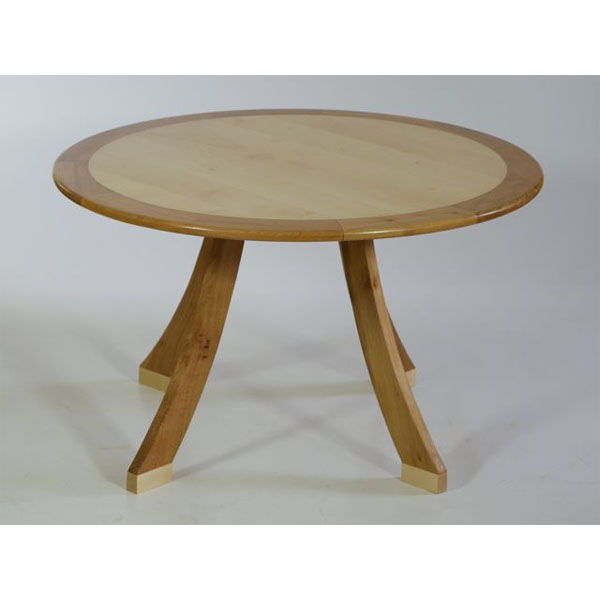
There is a bit of Japanese inspiration to this table. Gently curving legs support a circular top designed to seat 6 people.
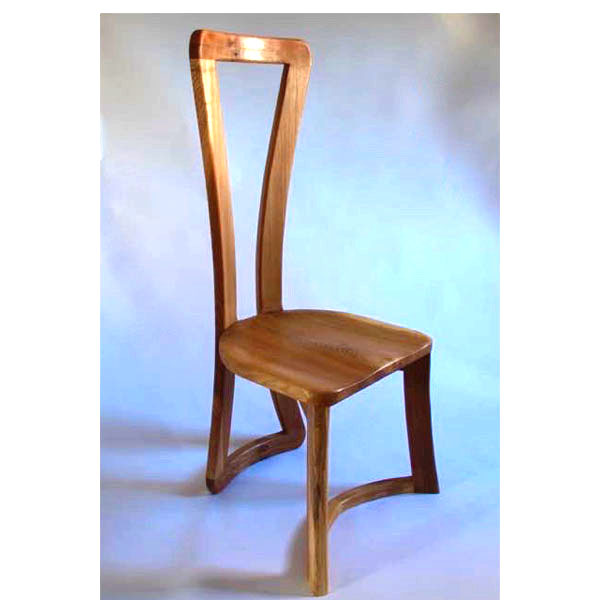
The hourglass chair has a bit of a Mackintosh inspiration. The high, elegantly shaped back is the main feature with a sculpted elm base.


This oak corner unit was commissioned to fit a very specific space. It is 4m long and made of Scottish oak. The need to go round a corner allowed use of concave doors which were a bit fiddly but make the piece a bit special.
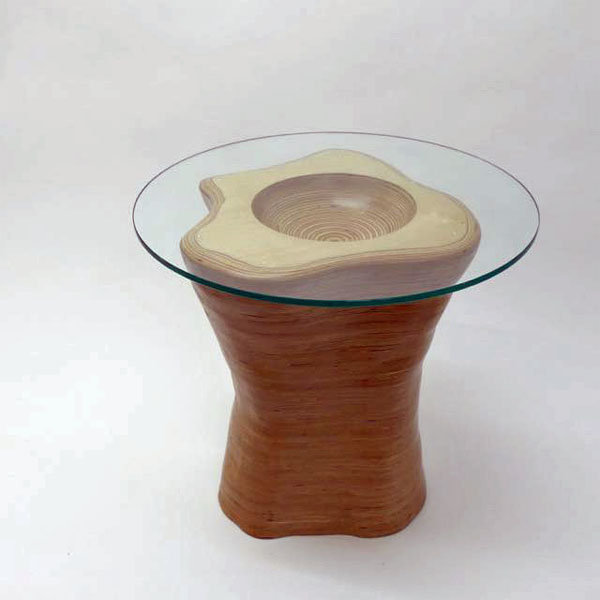
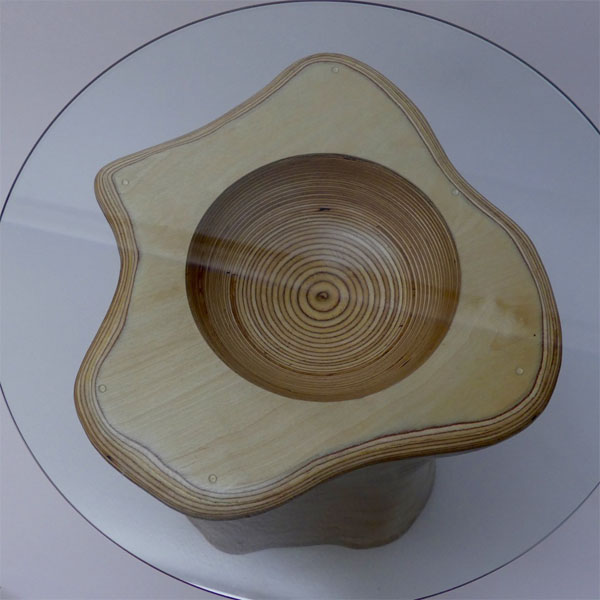
This was a spin off from a larger table. Stacking layers of birch ply then sculpting a curved shape reveals a fantastic view of the ply laminations. The technique is more sculptural than I normally do but was really enjoyable to make. The top section has a turned bowl (again, just to show off the layers) with a toughened glass top.
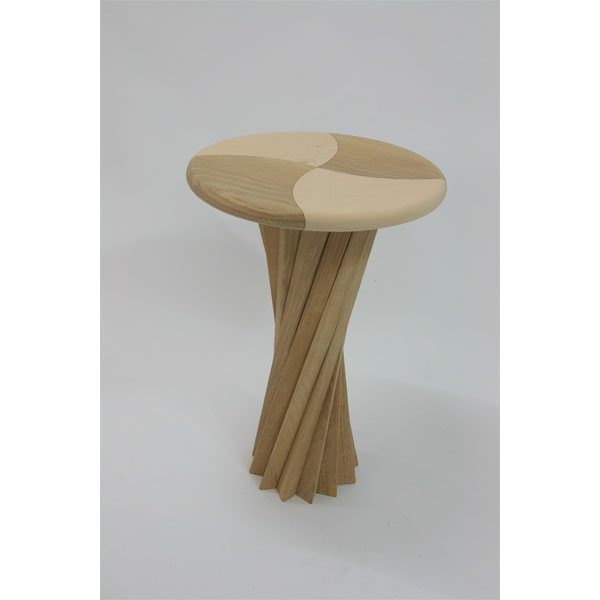
The spiral table was a happy accident after a collection of triangular offcuts were tied together with an elastic band. Splaying out these pieces showed the potential for the shape. The scaled up version uses 12 oak pieces doweled & glued together with a two tone top.

This is the classic Windsor chair with curved back and crinoline stretcher. This one has a backs plat that was designed by the client. Very comfortable it is too!
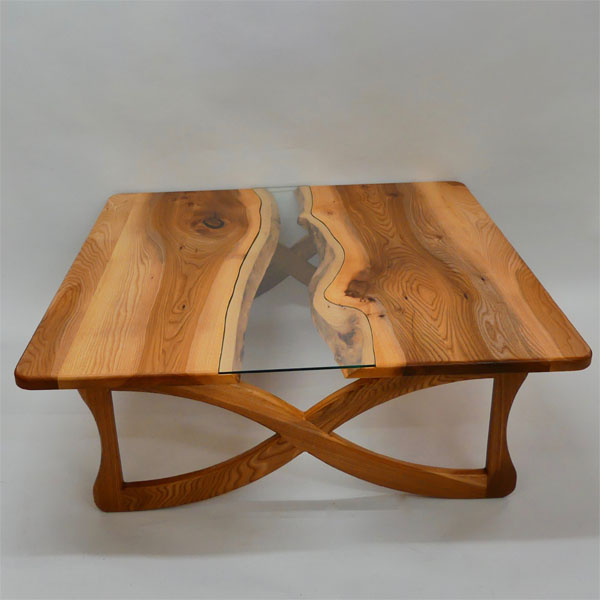
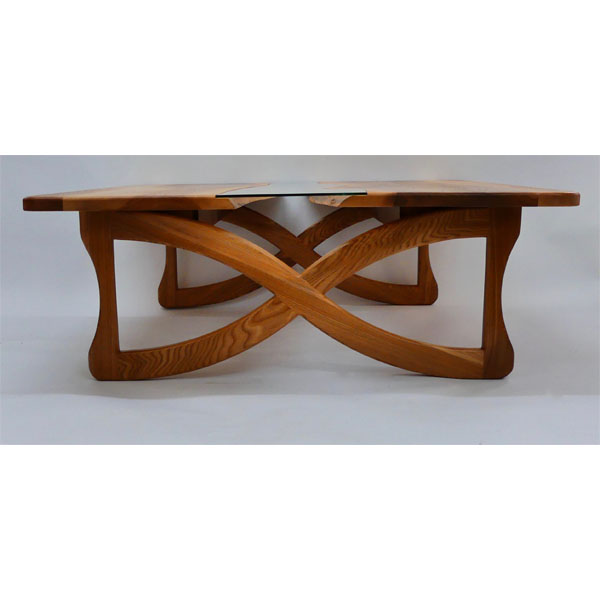
This table is based on the elm and glass coffee table I made a couple of years ago but with a couple of changes. The glass is shaped to the lines of the timber giving a really organic shape. Also, the legs are an interlocking pair of curves. This shape is based on the scissor arch seen in Wells Cathedral – I love the shape and will have to use it again.
Secret storage for magazines and TV remotes is hidden under the top.
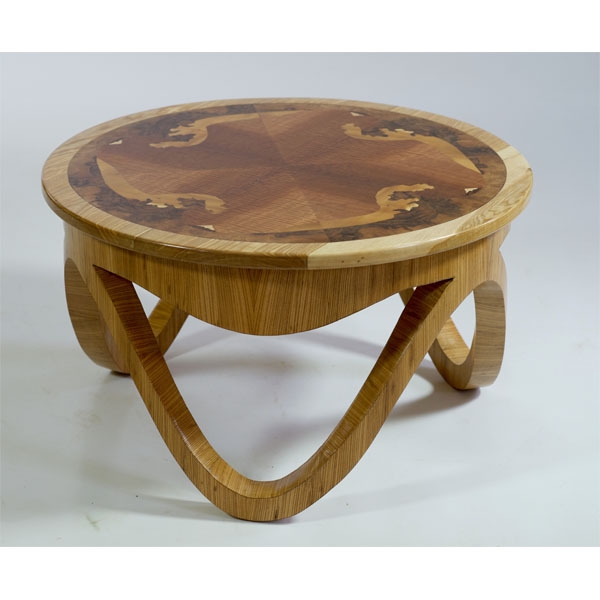
The Great Wave Table is a marquetry piece that uses the classic Japanese print ‘The Great Wave off Kanagawa’ by Hokusai. The image is used 4 times in a circular pattern. The legs are circular & sinusoidal finished in olive ash veneer.

The crossover oval table is based on a circular side table I made a couple of years ago but using an oval top and asymmetric legs. I love the leg detail – the legs intertwine around a central block. It is chestnut with a central piece of spalted beech in the top.
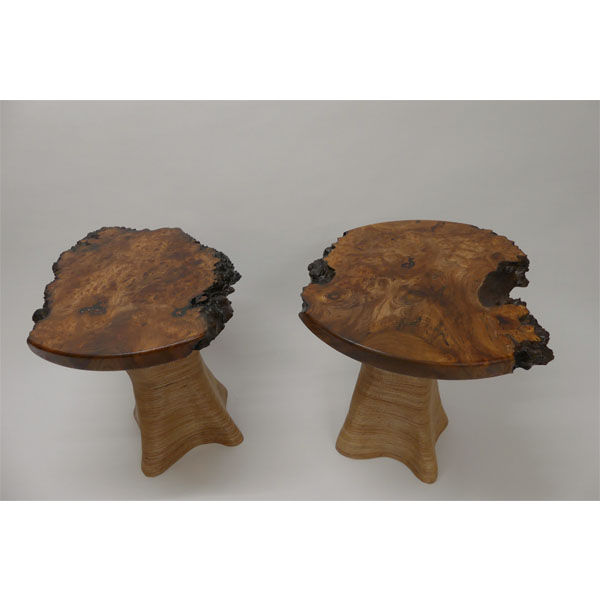
These burr elm tables were commissioned to match the large burr elm coffee table. After an extensive search for 2 good bits of burr elm (its getting hard to find!) I got my hands on these fantastic, chunky slabs. They were both meant to be approximately circular with some natural edge but one piece had such a great edge I couldn’t cut it off.
The tops were filled with amber resin inlaid with shredded gold leaf to match the original table. The bases are 21 layers of birch ply cut to shape, stacked and sculpted to be a tree-like shape.
All finished in several coats of Danish oil.
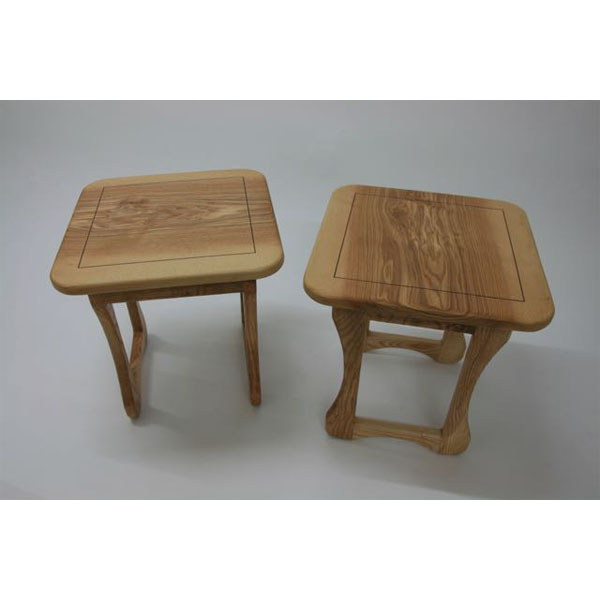
Based on an earlier project, this pair of ash side tables make best use of some fantastically interestingly grained ash. The tops are offset with a thin line of rosewood inlay. I am using the leg configuration that worked really well on the natural edge elm tables.

The Windblown Console Table was designed for an exhibition at the Royal Botanic Gardens in Edinburgh. The timber – sweet chestnut & Norway maple – came from trees brought down during cyclone Andrea in 2012. The exhibition aimed to show life after the storm.
The piece uses a twist on the conventional console table shape as if it is bracing against a strong wind. This gives a real dynamic feel to the work.